


Price Display Solutions for EV Charging
Intelligent display technology and digital signage for your EV charging park – Made in Germany
Why PWM for EV Charging?
Proven Technology
Our outdoor displays have withstood all weather conditions for years. We now bring this robustness to charging infrastructure.
Global Network
Present in 160+ countries across 6 continents, we know local requirements and international standards—from IEC 62196 to ISO 15118.
Comprehensive Digital Signage Solution
The complete digital signage system for your charging park: display, software, service, advertising space monetization, and interface integration—all from a single source.
Made in Germany
Designed, developed, and manufactured in Bergneustadt. German engineering quality you can trust.
The Energy Transition Needs Smart Infrastructure
EV charging stations need the same visibility as traditional fuel stations. Drivers should be able to see prices, availability, and charging performance at a glance.
Charging infrastructure must work 24/7 in all weather conditions—just like our proven petrol station systems for over 40 years.
Operators need flexible pricing, advertising space, and remote management—all from a single partner.
40+ years of experience | 160+ countries worldwide | 40,000+ installations
PWM EV Charging: More than just power.
1. Smart Charging Stations
- AC & DC fast charging options
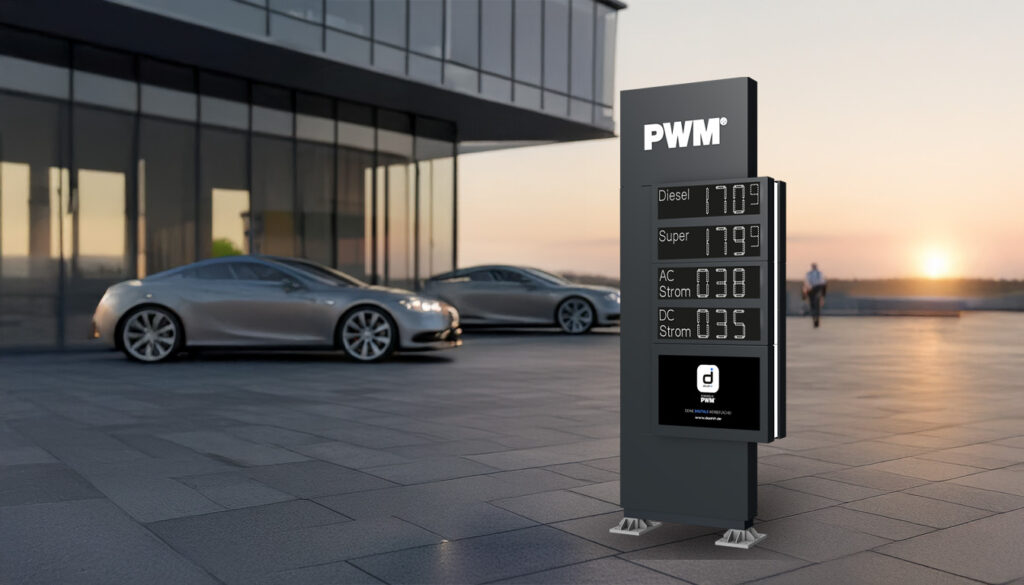
- Integrated PWM price display technology
- Weatherproof (up to IP67) – proven PWM quality
- Modular design for easy maintenance
2. Digital Signage Integration
- dooh-it cloud platform integration
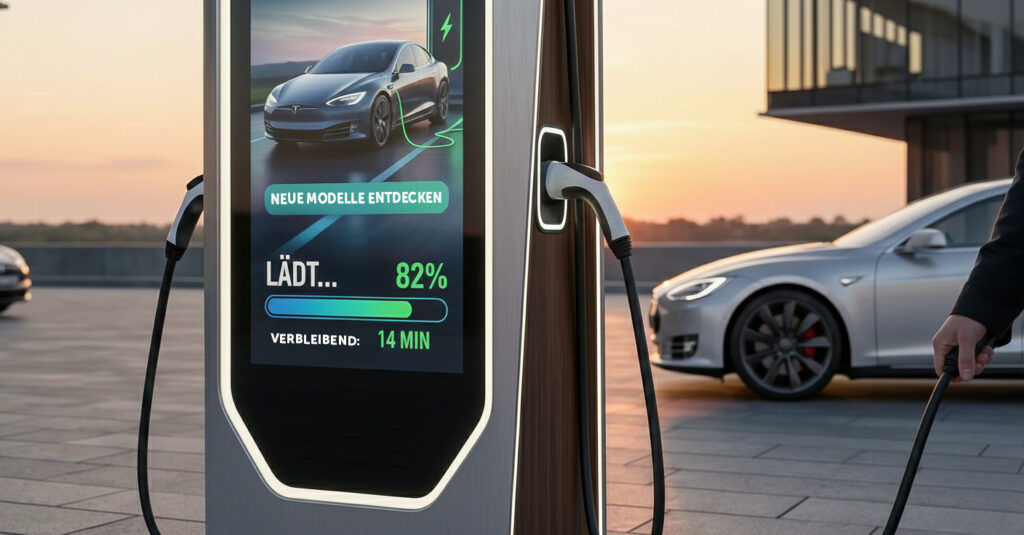
- Advertising during charging = extra revenue
- Real-time price updates
- Cross-selling opportunities (shop, café)
- Display of charging parameters during the charging process
3. TRACK Control System
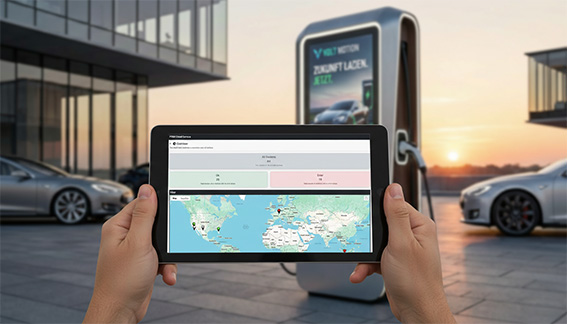
- Internet-based management system
- Remote price control
- Utilization analytics
- Service tools for maintenance
4. Complete Price Signage
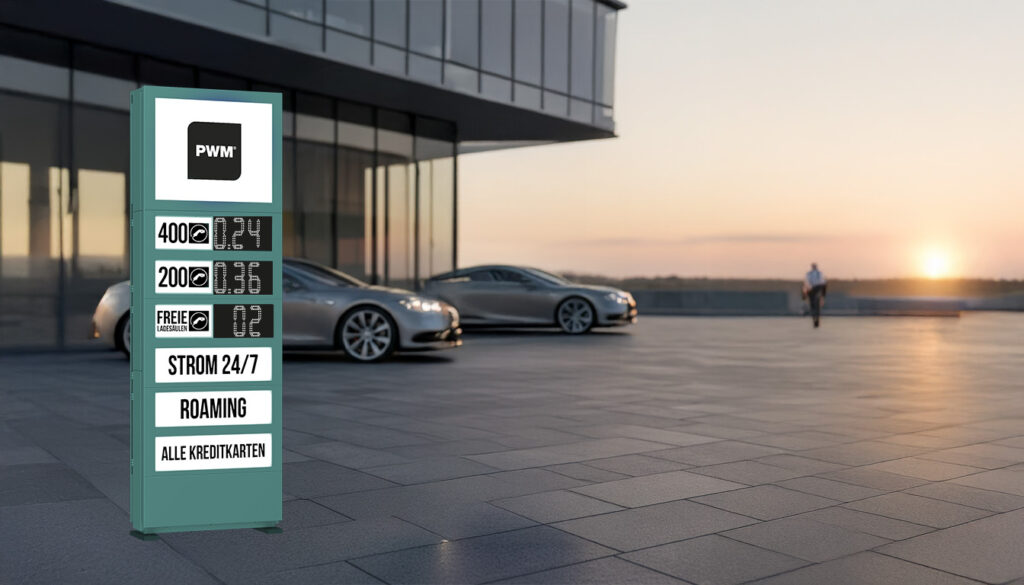
- Customized design to match your CI/CD
- Combined price and charging display
- Made in Germany quality
- Available for all charging technologies
1984: First electronic price display (rolling band, segment)
1996: Electronic LED digit price display
2009: IP67 technology
2010: RGB board
2018: TRACK cloud system
2022: dooh-it content management system
2026: EV Charging Solutions (shaping the future)
The Interface for EV Charging
What is OCPI?
– the interface that connects all integrated systems in e-mobility

OCP versions:
Maximum flexibility for your price display
In traditional petrol stations, fuel prices come directly from the POS to your PWM price display. In electromobility, the system is more complex due to many providers, charging networks, and roaming partners interacting. OCPI plays a core role here.
OCPI (Open Charge Point Interface) is constantly evolving to meet growing market and regulatory requirements (e.g., the EU AFIR regulation). To keep your PWM displays manufacturer-independent and future-proof, we support communication with all common OCPI versions.
Supported OCPI Versions
OCPI 2.1.1 – Proven standard for exchanging location info, status, and basic tariff data.
OCPI 2.2.1 – Widely adopted today, enhances smart charging and tariff modeling accuracy.
OCPI 2.3.0 – Designed to meet AFIR transparency requirements with more granular pricing display.
Full support from PWM
PWM fully supports all versions, ensuring investment security and correct tariff visualization in real time, regardless of backend system.
The “Common Language” for Charging Stations
OCPI is an international standard protocol that enables different IT systems in e-mobility to communicate smoothly.
Think of OCPI as a translator: it allows operators (CPOs) to share data—like location, availability, and especially prices—in real time with other systems and providers.
OCPI: The Ideal Integration of Price Displays into Your EV Charging Infrastructure
To ensure that a PWM price totem or RGB board at your EV charging station always shows the current, valid tariff, it requires reliable, real-time data. OCPI (Open Charge Point Interface) acts as the digital bridge that delivers this information seamlessly.
Real-Time Price Transparency: Via OCPI, current charging tariffs are transmitted directly from the cloud to your PWM control system (e.g., TRACK). If the operator updates the charging price in their backend system, the display on the totem or LED board adjusts automatically — instantly and without manual intervention.
AFIR Compliance: The new EU regulation AFIR (Alternative Fuels Infrastructure Regulation) mandates clear and transparent pricing at publicly accessible EV charging stations.
By combining OCPI data integration with highly visible PWM LED price displays, operators can easily comply with AFIR requirements — ensuring legally compliant EV charging price transparency while enhancing customer trust.
Maximum Visibility for EV Drivers:
PWM price displays ensure that charging costs are not only visible within a driver’s mobile app but are clearly readable from a distance on the PWM monolith — just like traditional fuel price pylons at conventional filling stations.
This creates familiarity, builds trust, and improves the overall EV charging customer experience.
The Benefits of PWM & OCPI at a Glance
Automation: No manual price updates required. The PWM Cloud receives pricing data via OCPI and automatically controls LED segments or RGB boards in real time.
Trust & Transparency: Drivers see the exact charging price displayed prominently before initiating the charging session — increasing confidence and reducing disputes.
- Future-Proof Infrastructure: By relying on open standards such as OCPI, PWM ensures full backend flexibility. Your EV charging price displays remain compatible regardless of which charge point management system (CPMS) your customers use.
- Comprehensive Service & Lifecycle Support: A cross-regional, international service partner network combined with full operational transparency via a centralized dashboard. Enhanced by predictive maintenance, remote diagnostics, rapid response times, and a dedicated point of contact throughout the entire lifecycle of your EV charging solution.
In addition to OCPI, we also offer our own API for integration into systems or can connect a customer API to our system.